


 6 min read
In brief
- AI agents are easy to pilot but stall when moving to production environments.
- Platform engineering provides the proven path to scale AI agents reliably and securely.
- An "agent platform" is the missing layer needed to manage AI agents at scale.
AI agents are easy to pilot. But when you try to move from experiment to production, progress stalls — because the hard part isn’t “more AI,” it’s the platform that must run AI reliably.
- 88% use AI in at least one business function (compared to 55% in 2024)
- At the same time, 78% use Gen AI in at least one area of operations
At first glance, it looks like a success, but only 38% deploy AI past pilot environments. There’s a similar pattern in agent-based systems. Only 62% experiment with AI agents, but only 23% run agents at scale in production.
In this article, we share common blockers that keep AI agents stuck in pilots, why platform engineering is the proven path if you want to move from experimentation to production, and what an “agent platform” is.
What blocks AI agents from scaling
AI agents need orchestration, life cycle management, tool access, and governance. Here’s what blocks progress:
- No change in business processes supported by AI
- Lack of control and platforms
- Insufficient investment in organizational change
- Lack of a scalable architecture
Why platform engineering naturally extends to the AI world
The four blockers resemble the challenges you may have seen during the early shift to cloud-native architecture. At that time, individual teams could build working solutions, but as more applications were added, the environment got complex. Standards were missing, and time spent on maintenance increased. The answer: platform engineering.
Internal Developer Platforms (IDPs) made developers faster
IDPs created an abstraction layer above infrastructure, giving teams:
- Ready-to-use environments
- Standard pipelines
- Observability tools
- Security mechanisms

IDPs simplify application development, but AI adds a new layer of complexity. The standardization that once helped developers ship software faster is now crucial for reliably running AI systems. Just as internal developer platforms (IDPs) became the foundation for cloud-native apps, they are now paving the way for a new type of platform for AI agents.
Two platforms: developer and agentic
Developers could build apps instead of managing the environment or integrating with external systems, such as Secret Manager or Certificate Manager. We're now seeing the same thing happen in the world of AI. There are two types of platforms:
1. Developer
- Simplifies the work for teams building solutions and applications that aren’t necessarily related to AI
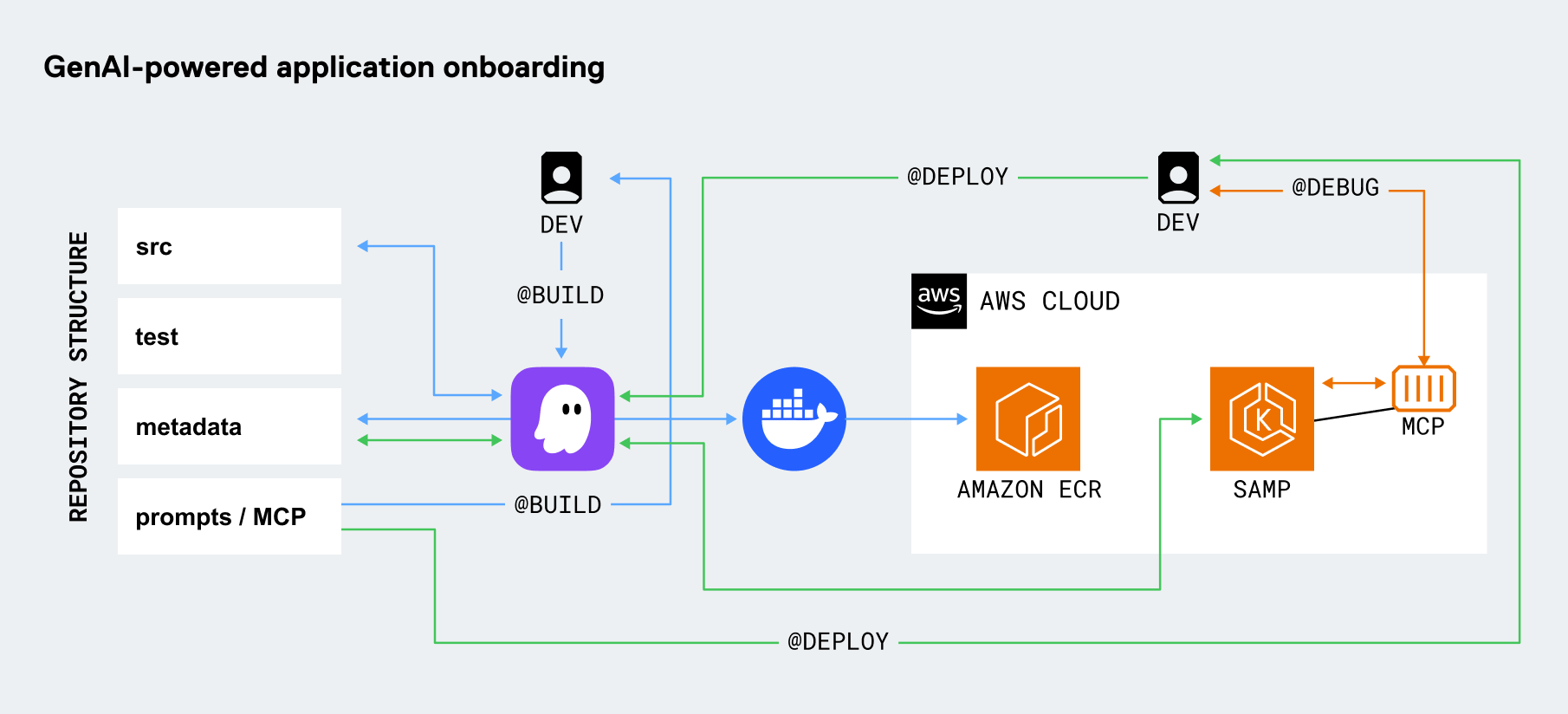
- Developers can interact with the environment from their existing tools, like IDEs, CI/CD pipelines, and other development tools
- Integrates with next-generation tools, such as agent-based IDEs like Kiro
With properly designed standards, MCP servers, and tool sets, developers interact directly with the platform. For example, they can use natural language to check if their application is running or to get the last ten lines of logs, without knowledge of complex filters or command syntax like kubectl used in Kubernetes.
2. Agentic (next level)
The second type is more interesting. As agent-based systems grow, teams need platforms to manage the agents themselves:
- Life cycle
- Orchestration
- Observability
- Security
- Integration with current organization systems
This creates a new category of platform: agent platforms, which plays the same role for AI agents that cloud-native platforms played for micro-services. It connects two worlds
- The developer experience for teams building apps and AI systems
- The foundation that makes managing agents predictable and scalable
The platform as the developer interface
Platform engineering focuses on the developer experience, not just infrastructure. A good system lets developers skip environment configuration, infrastructure provisioning, and tool integration. It uses a repeatable, self-service model to handle these tasks. This is even more critical with AI. Building systems with AI models or agents means managing many moving parts, such as:
- Data pipelines
- Models
- API integrations
- Observability mechanisms
Without the right foundation, things can get chaotic. That's why more companies are investing in platforms.
Learn more
Developers interact through familiar tools (such as CI/CD pipelines and development environments) enhanced with AI-powered components. Interaction with the environment happens through automated workflows, or next-generation tools (like agent-based IDEs or systems like Kiro). It's the interface between the developer and infrastructure complexity.
Why AI agents need a dedicated platform layer to scale
Remember how platform engineering helped tame the complexity of the application world? The AI world has a similar, but even bigger, challenge. When we're dealing with agent-based systems, it's not enough to just manage infrastructure or pipelines. You need to manage the agents themselves and determine their specific job within the larger ecosystem:
- AI models and tools
- Integration with business systems
- Data flows
- Orchestration and decision-making mechanisms
- Monitoring and observability
- Governance and security controls
As you build more agents, you'll see the real difficulty is managing a bunch of agents in a way that's predictable and scalable. You need a shared layer for agent orchestration, life cycle management, monitoring, and integration with existing systems. Platform engineering now extends beyond applications and infrastructure to include AI systems and agents.
The missing layer for enterprise-scale agents
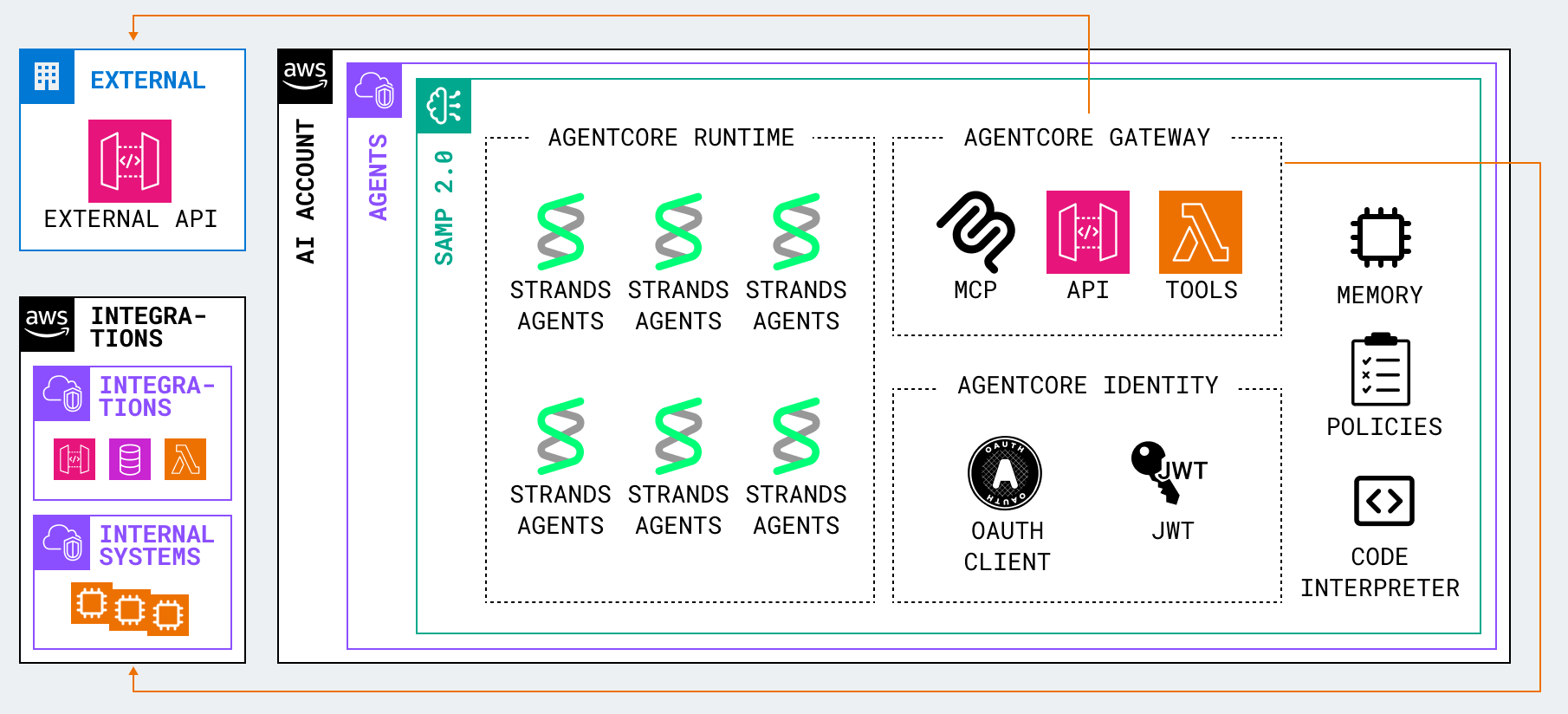
We’re developing SoftServe Agents Management Platform (SAMP 2.0) for this. It provides the foundation for building and managing agent-based systems, compatible with Amazon Bedrock AgentCore.
Learn more SoftServe Agents Management Platform (SAMP 2.0) one pager- Standardize agent management:Create, deploy, monitor, and secure agents with a consistent model that integrates with your existing CI/CD processes.
- Build a stable architecture:Turn isolated agent experiments into a core part of your company platform.
- Simplify deployment:Use Terraform to launch agents and their integrations, while maintaining enterprise-level standards.
Who Benefits?


You can't scale AI without a platform layer
If the cloud-native world has taught us anything over the last few years, it's that you can't manage complexity without a unified environment. Building one agent is easy; running hundreds is not. That's why platform engineering is a hot topic. Companies that build this new layer will gain long-term competitive advantage. At SoftServe, we understand your challenges, and design solutions tailor-made for your needs.
Move beyond AI pilots—build the platform to scale agents.