


15 Frequently Asked Questions About API Monetization
 10 min read
APIs are the backbone of modern digital business. They help developers meet specific user needs. As APIs grow in popularity, companies need tools to manage them — tools that create, secure, monetize, scale, and analyze APIs.
With years of experience, SoftServe’s Apigee team has put together the 15 most common questions about API monetization to get you started.

1. WHAT IS AN API?
To understand APIs, you must first recognize that all businesses have some form of digital assets. These assets can be expressed as software and are valuable for their unique elements, such as functionality, data, or access to specific product inventories or user bases.
Making these assets available to both internal and external developers requires a mechanism to deliver them. This is the role of APIs, or application programming interfaces. Developers use these APIs to build and add value to software applications.
If you’re interested in learning more about APIs, check out this quick video from Google:
2. WHAT IS API MONETIZATION?
API monetization is the way businesses can drive revenue from their APIs. There are many options and approaches to choose from, depending on the business's market strategy. Examples include charging for API usage, setting transaction fees, or driving indirect revenue.
However, there are several points to consider when deciding on API monetization. First, who are the potential users? Second, is there a demand for it, or would it be better to focus on rapid partner onboarding? It’s also important to consider your potential competitors, the rarity of your data, and the value you bring to the market.
3. WHY ARE APIs VALUABLE TO MY BUSINESS?
APIs are everywhere, making this era “The Age of the API Economy and Digital Transformation.” Many companies have access to vast digital assets. APIs that enable software developers to utilize these assets can be treated as products by both developers and business partners.
These products not only generate income through direct API usage but also expand business opportunities by attracting new clients, developers, and partners — all while creating consistent new revenue streams.
4. SHOULD ALL APIs BE MONETIZED?
When a business makes its APIs available to external developers, those APIs can generate both direct and indirect value. Distinguishing between these is essential for determining if and how an API should be monetized.
Today, companies can monetize a wide range of digital assets. For example, specific services like banking transactions are monetized by providing banks and customers with individual access to the information needed to complete a transaction. Other approaches focus on monetizing digital assets to expand the customer base and attract new potential clients.
The most common forms of API monetization include:
- Various authorization APIs
- Commercial bank APIs for financial transactions
- Product APIs with lists of products and services
- FX conversion APIs, etc.
Almost every valuable digital asset can be monetized, except for those tied to proprietary or sensitive processes. However, it’s not just about monetization. Businesses must also develop the right strategy for API implementation as both a market product and a potential monetization opportunity.
This means that API management requires a comprehensive and effective monetization strategy to fully leverage one of the existing monetization models.
5. WHAT ARE THE BENEFITS OF API MONETIZATION?
The most impactful benefits of API monetization include:
 |
 |
 |
| New revenue sources and scaled business efficiencies | Improved value chain and enhanced business potential | New and unique feature implementations |
 |
 |
 |
|
Product simplification and improved experience
|
Transforming cost centers into revenue generators
|
Reaching new markets and millions of customers while avoiding technical and cultural challenges through a well-implemented API integration approach |
As you can see, there’s more than just potential revenue driving businesses to open their APIs.
6. ARE THERE ANY RISKS IN API MONETIZATION?
There are a few potential risks to be aware of. The most prominent are security-related issues. Being the only point of entry, APIs can be a primary target for hackers. APIs are vulnerable to CSRF attacks, XSS attacks, man-in-the-middle attacks, DDoS, and other problems like SQL injections. Businesses must enhance their security strategy with any number of available options.
7. ARE THERE OTHER TECHNICAL ISSUES OR ADVANTAGES TO API MONETIZATION?
Simple APIs must integrate the latest innovations to meet demand. API providers should also remember that API monetization requires effective release management and monitoring to quickly detect and address service disruptions.
Shaping a monetization strategy is often an iterative process, so reviewing API analytics to understand consumer usage is crucial. Investing in tools that offer flexibility, such as the ability to adjust pricing, is essential to staying competitive.
8. DO APIs IMPROVE CUSTOMER EXPERIENCES?
The purpose of using APIs as market products is to make things more convenient for potential customers and users. Beyond simply exposing your digital assets as services and integrating with potential partners, APIs can also enhance your business intelligence.
Through various value chain integrations, APIs enable companies to collect substantial amounts of essential data on customers’ interaction habits, preferred products, and favored services across a wide range of modern channels and devices.
9. CAN APIs HELP TO REACH NEW MARKETS?
As mentioned earlier, the flexibility and simplicity of API integration enable broader access to applications. This also provides access to the digital assets of companies from an increasing number of countries. People in developing countries are increasingly utilizing global payment systems and mobile services through available mobile devices.
While creating a specialized platform with localization and a high level of trust can be both costly and time-consuming, open APIs help reduce costs and accelerate development for platforms operating in local markets. Additionally, APIs make it easy to integrate with local partners and developers without language barriers, further expanding the potential for comprehensive monetization of your services.
10. WHAT ARE THE MAIN MODELS FOR API MONETIZATION?
Depending on internal business dynamics, companies adopt various API strategies to boost revenue and expand digital market opportunities.
To maximize benefits, the following monetization models are often employed simultaneously:

Free
A widely popular approach where users can register and start using the API at no cost, allowing them to evaluate how well it meets their specific needs before committing to payment.

Consumer pays
With a valuable asset comes the opportunity to charge for API usage. However, pricing should remain flexible and adaptable to changes when necessary.

Consumer gets paid
To incentivize API consumers and encourage high-quality integration and the development of revenue-generating apps, companies can share revenue from alternative API monetization streams.

Indirect monetization
Generates revenue through advertising by leveraging developers and partners as third-party marketing agents to promote your brand and services, driving traffic to existing applications.
11. WHAT DO API MANAGEMENT PLATFORMS DO?
Monetizing APIs requires specialized tools, which is why API management platforms are essential. Leading software companies have already transitioned from selling standalone products to offering comprehensive platforms.
The reason is clear: while standalone software products generate a single revenue stream, platforms — by connecting users and services — create multiple revenue streams. Platforms enable a multi-sided business model, serving as a key growth driver for both software companies and their clients.
An API management solution typically includes essential tools and services, such as:
- An API gateway to secure traffic
- A developer portal for app developers to test and purchase APIs
- API lifecycle management tools to oversee development and deployment
- Analytics and monitoring tools
- Convenient API monetization features
Leading API management platforms offer customers a wide range of scalable and flexible capabilities within a comprehensive, self-sufficient system designed to support various environment architectures.
12. WHAT ARE THE BEST API MANAGEMENT PLATFORMS?
Several API management platforms stand out for their robust features and comprehensive solutions, helping businesses effectively manage and monetize their APIs.
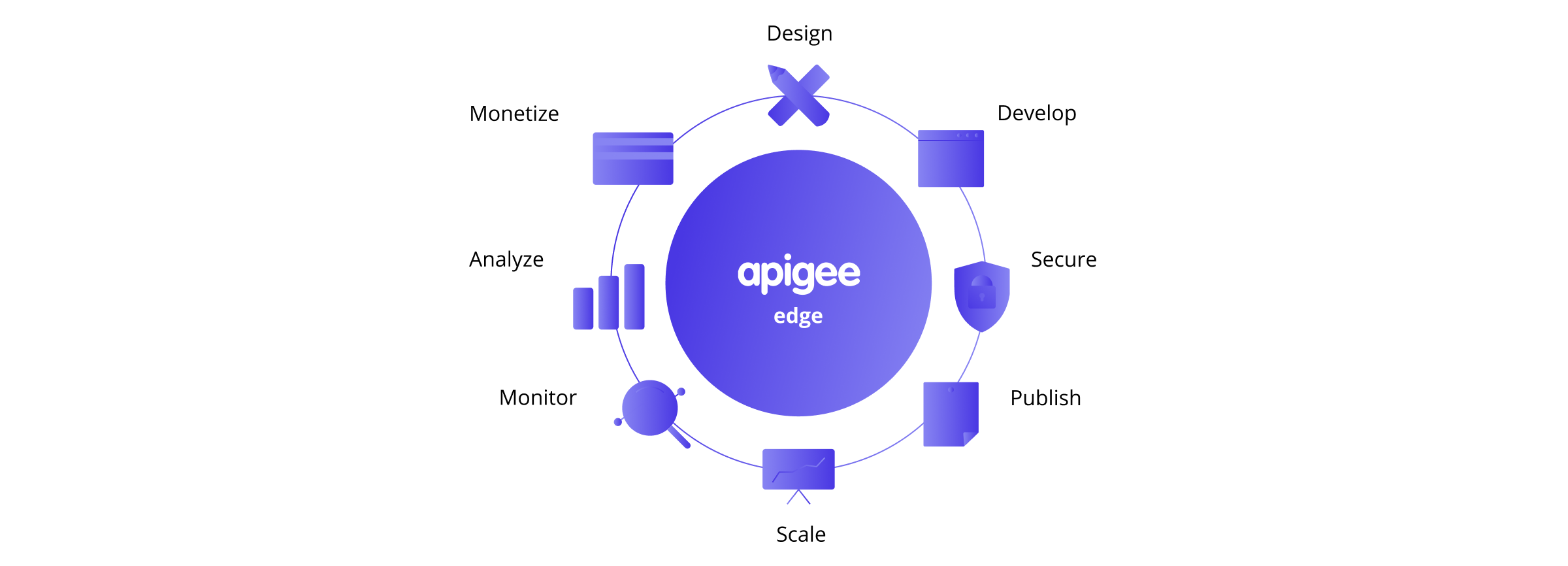
Google Cloud’s Apigee API management platform is widely recognized as a leader in the field. It offers a range of advanced features, including API user engagement, REST API documentation, formal lifecycle management, data validation and attack protection, API product management, analytics, and reporting.
Apigee is also praised for its strategic vision, planned enhancements, and ability to provide a comprehensive suite of tools that empower businesses to maximize their digital capabilities and streamline API management.
13. CAN I MONETIZE MY COMPANY'S API MYSELF?
You could try. It’s possible to create and develop separate proxies as well as the entire transformation flow within the Apigee platform. However, without extensive use case experience and a deep understanding of systems, you’re likely to encounter development failures.
These failures — along with negative customer feedback — can ultimately cost you time and money due to missed deadlines, while also complicating existing development goals.
To ensure consistent business growth and seamless API integration, a comprehensive architectural solution that oversees the entire API integration and management lifecycle is essential. SoftServe’s global team of certified specialists, with extensive experience in Apigee, provides clients with expertise and support throughout the API development lifecycle, offering the best architectural solutions tailored to specific business needs.
We are highly skilled in overcoming API development challenges, including testing, design, CI/CD, developer portals, monitoring, analytics systems, and crafting cloud, hybrid, and on-premises architecture approaches.
SoftServe delivers efficient, flexible, and scalable enterprise solutions customized to meet unique business requirements.
14. WHAT ARE SUCCESSFUL EXAMPLES OF API MONETIZATION?
Successful API monetization examples are growing daily, with notable cases including Facebook, Instagram, AccuWeather, TripAdvisor, SkyScanner, and Telstra. These companies have encouraged other businesses to embrace the “API Economy,” expanding their horizons and capabilities.
Facebook and Instagram, in particular, have made significant progress by introducing new APIs within their services that integrate seamlessly with various commercial and trading platforms. This innovation has enabled these companies to offer transaction capabilities directly within their social networks.
For instance, Facebook launched the “Shops” service, allowing businesses to open stores on Facebook and Instagram for free — even without a website. Sales logistics are managed by platforms like Shopify, BigCommerce, and Woo. Users who follow a brand's page can simply click the "View Shop" button, browse products, and make purchases without leaving the social network interface.
Even large businesses can thrive on this platform, as it allows products to be organized into categories with no limit on the number of SKUs.
Another excellent example of successful API integration and monetization is AccuWeather, which leverages Google Cloud’s Apigee platform.
A notable API monetization success story from SoftServe involves our client, Keller Williams. By utilizing Apigee and API-based projects, we helped this real estate tech giant unlock new revenue streams.
15. WHERE DO YOU BEGIN YOUR API MONETIZATION JOURNEY?
Start by reaching out to SoftServe to leverage our extensive expertise in strategizing and implementing your unique API monetization path. From identifying your most valuable business capabilities or data to determining how to market, service, and enhance your product, SoftServe is ready and fully equipped to help.
Let’s talk about your API monetization journey today